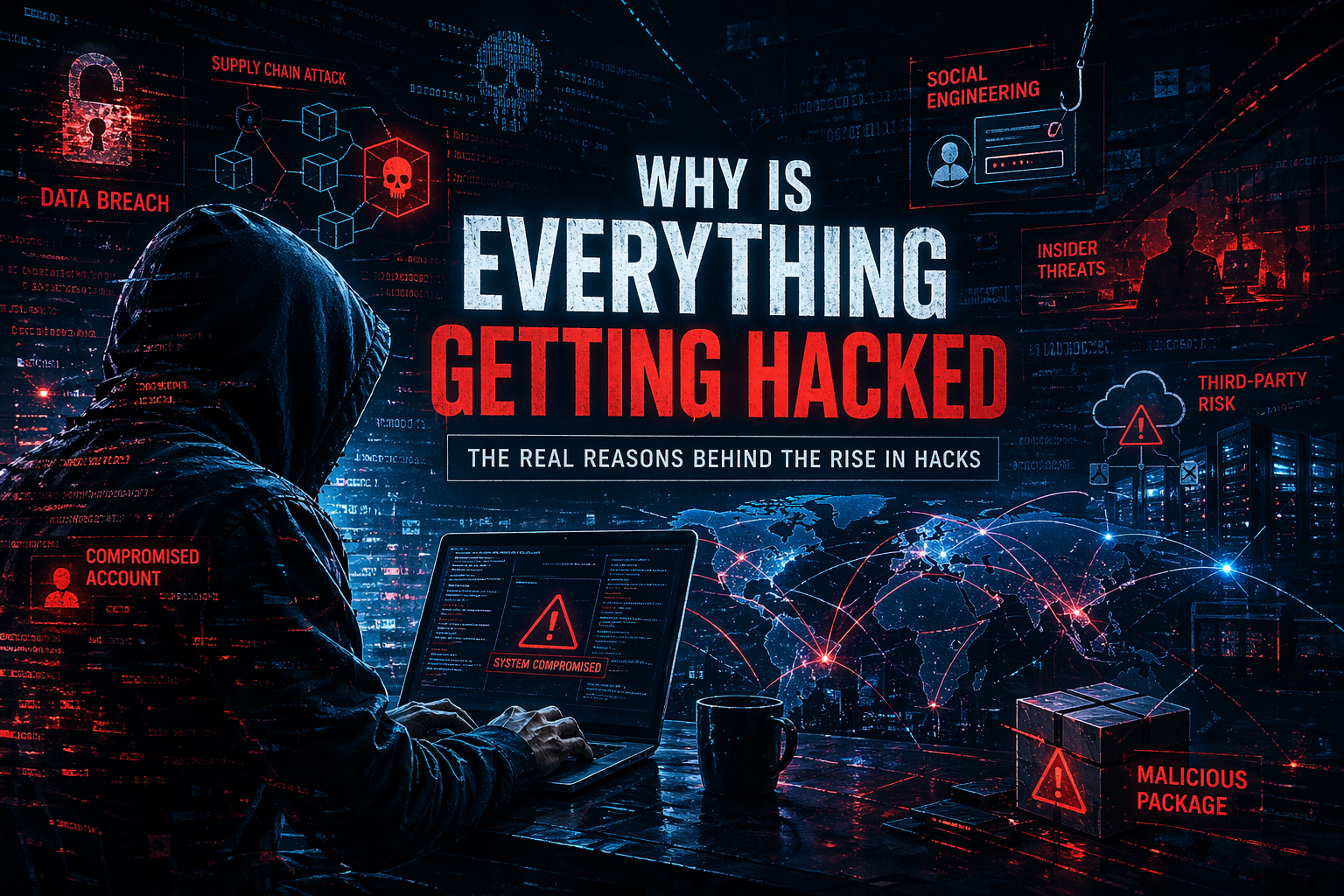
Every few days, another headline appears: a major platform breached, a developer tool compromised, or user data leaked. It can feel like cyberattacks are happening more often than ever before.
But is it really getting worse — or are we just hearing about it more?
This article breaks down the key reasons behind the rise in reported hacks and data breaches, based on the video discussion.
📢 More Hacks Are Being Reported Than Ever Before
One of the biggest reasons it feels like hacking is increasing is simple: companies are now required to report breaches much more quickly and publicly.
Recent regulations such as SEC rules (for publicly traded companies), GDPR in Europe, and various state-level laws mean:
- Companies must disclose breaches within days
- More incidents are publicly documented
- Fewer breaches can be quietly hidden or delayed
So while hacks did happen before, many simply weren’t visible to the public.
🔓 Companies Are Still Not Being Punished Enough
A major underlying issue is accountability.
Even when large-scale breaches occur, companies often face:
- Minor financial penalties
- Temporary reputational damage
- Internal process updates after the fact
For many organizations, the cost of weak security is still lower than the cost of preventing every possible attack. That creates a weak incentive to fully prioritize cybersecurity.
🧠 The Human Factor: Employees Are the Weakest Link
Modern cyberattacks rarely focus on breaking hardened systems directly.
Instead, attackers often target people:
- Phishing and social engineering
- Malware infections on personal devices
- Compromised developer accounts
- Reused passwords or weak authentication
Once an employee account is compromised, attackers can often move deeper into internal systems.
Even major incidents (like breaches affecting large platforms) have started from compromised personal devices or third-party tools.
🔗 Supply Chain Attacks Are Growing
One of the most serious modern threats is the supply chain attack.
Instead of attacking a company directly, hackers target:
- Open-source packages
- Third-party services
- Software dependencies used by developers
Examples include ecosystems like:
- NPM (JavaScript)
- PyPI (Python)
- NuGet (.NET)
If a malicious update is pushed to a widely used package, thousands of apps can become infected instantly.
Attack methods include:
- Hacking maintainers of popular libraries
- Typosquatting (fake packages with similar names)
- Injecting malware into updates
This makes modern software extremely interconnected — and fragile.
☁️ “Trusted” Services Can Still Be Breached
Even major SaaS platforms and developer tools can be compromised indirectly.
Recent examples discussed include situations where:
- Employees are tricked into granting excessive permissions
- Third-party services are compromised first
- OAuth / Google login permissions are abused
In many cases, attackers don’t need to break the main company at all — just a connected service is enough.
💰 Bribery and Insider Threats
Not all attacks are technical.
Some involve:
- Bribing low-paid support or outsourced employees
- Exploiting third-party contractors
- Leveraging access for financial gain
This is especially dangerous because it bypasses traditional security systems entirely.
🔐 Security Is Evolving — But So Are Attacks
Companies are improving defenses with:
- Zero-trust security models
- Hardware authentication keys (like YubiKeys)
- Stronger access controls
- Continuous monitoring systems
But attackers are also evolving, often faster than organizations can adapt.
🤖 AI and “Vibe Coding” Add New Risks
A newer concern is the rise of AI-assisted development.
Risks include:
- AI suggesting unnecessary or unsafe dependencies
- Developers blindly installing packages
- Fake or malicious packages being created to match AI hallucinations
- Rapid expansion of external dependencies in projects
This increases the “attack surface” of modern software dramatically.
📉 So… Are Hacks Really Increasing?
The answer is yes — and no:
✔ Yes, because:
- More systems are connected than ever
- Supply chain attacks are growing
- Human error is still the weakest point
✔ But also:
- We’re hearing about more breaches due to legal reporting requirements
- Detection systems are better
- Transparency has increased significantly
🧾 Final Thoughts
Cybersecurity today is less about “strong walls” and more about complex ecosystems of trust — between developers, tools, services, and users.
The reality is that most modern breaches don’t come from brute-force hacking. They come from:
- People
- Permissions
- Dependencies
- And trust chains
As software becomes more interconnected, security becomes less about one system — and more about everything connected to it.